
What Are Machine Learning Concepts? Simple Guide & Examples

If you’ve ever wondered how Netflix recommends shows you might like or how your phone recognises your face, the answer often lies in machine learning concepts. Machine learning (ML) is a branch of artificial intelligence where computers learn from data instead of being programmed with strict rules.
This guide will walk you through the basic machine learning concepts in simple language, with real-life examples that make sense even if you’re completely new to the topic.
Why Learn Machine Learning Concepts?
Machine learning powers everyday tools — from voice assistants to fraud detection in banks. By understanding the core concepts, you will:
-
Get a clearer picture of how smart systems make predictions.
-
Know which ML method suits which type of problem.
-
Avoid confusion when terms like “supervised learning” or “overfitting” come up in conversations.
Think of these concepts as the “ABC” of machine learning — you can’t write sentences without knowing your letters first.
The Core Machine Learning Concepts
1. Types of Learning
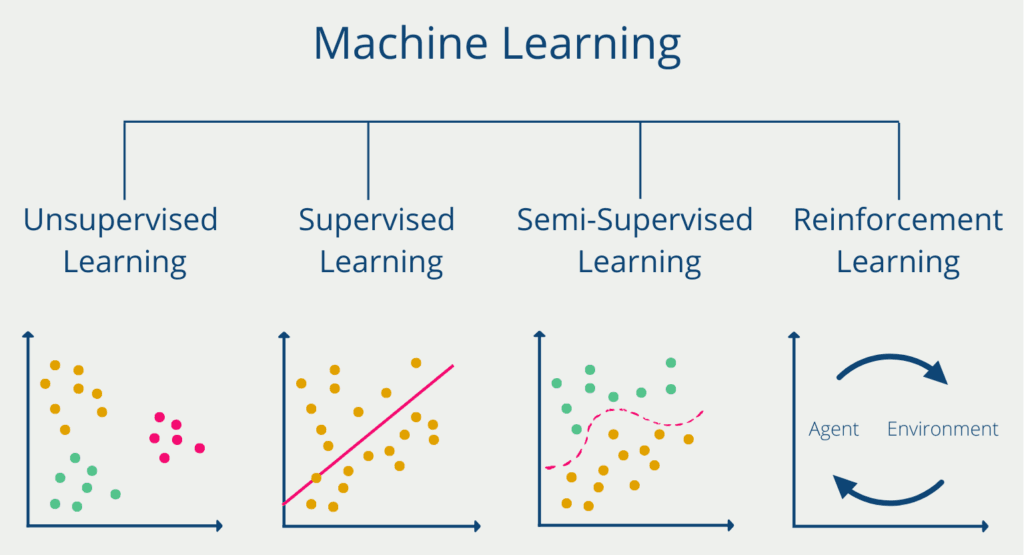
There are four main ways machines learn:
-
Supervised Learning
Imagine teaching a child with flashcards. You show them a picture of a cat and say “cat.” Over time, they learn to identify cats. In supervised learning, computers are given data (input) along with the correct answers (output) to learn patterns. -
Unsupervised Learning
This is like giving a child a box of toys and asking them to group them by similarity, without telling them the names. The machine finds patterns or clusters in data without being told the correct answers. -
Semi-Supervised Learning
A mix of both — like showing a few labelled flashcards (cat/dog) and then letting the child guess the rest. This saves time when labelling data is expensive. -
Reinforcement Learning
Think of training a dog. When the dog sits on command, you reward it. If it jumps on the sofa, you say no. The machine also learns through rewards and penalties to take the best actions.
2. Features, Labels, and Models
-
Features: These are the “ingredients” that go into the recipe. For example, in predicting house prices, features include location, number of rooms, and size.
-
Labels: This is the “answer” you want the model to predict — in our case, the actual price of the house.
-
Model: Think of the model as the recipe itself. It’s the method the computer uses to turn features into predictions.
3. Overfitting and Underfitting
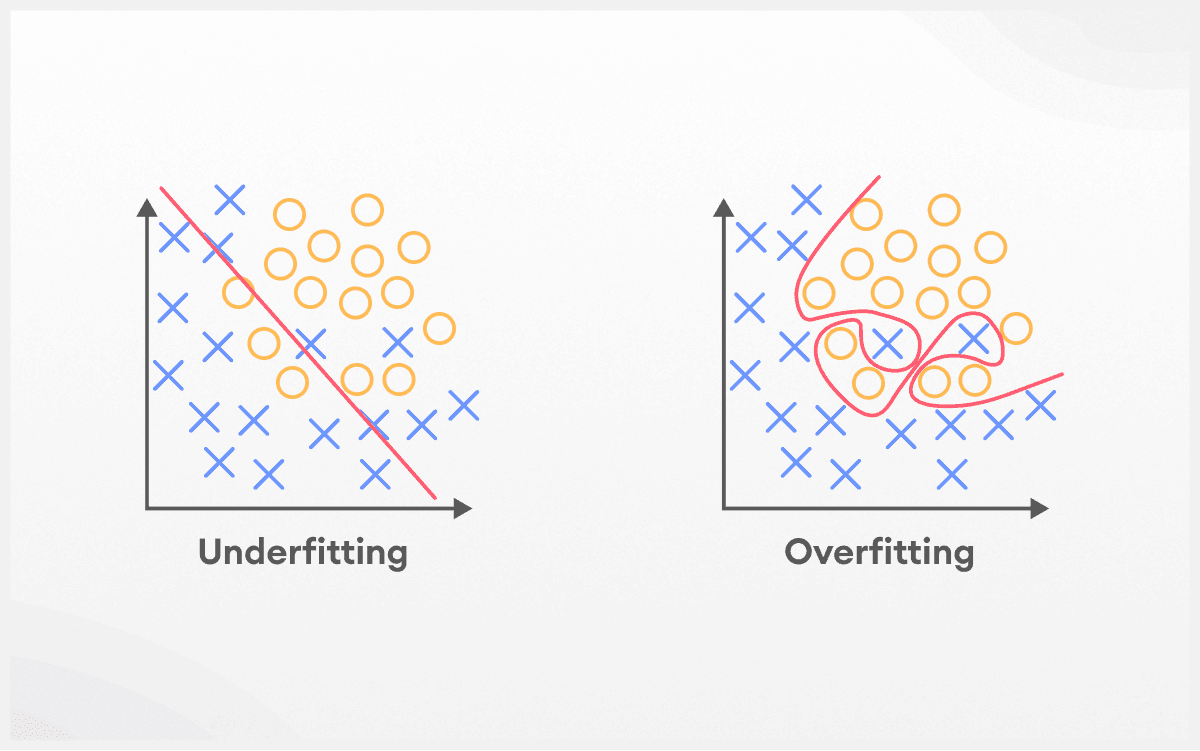
This sounds technical, but here’s an easy way to picture it:
-
Overfitting: Imagine memorising answers to practice exam questions but failing when a new question appears. The model learns training data too well, including noise, and struggles with new data.
-
Underfitting: Like a student who barely studies and fails both practice and final exams. The model is too simple and misses key patterns.
The goal is balance — learn enough to perform well on new data without memorising too much.
4. Evaluation and Accuracy
How do we know if a machine has really “learnt”?
We test it on new data it has never seen before. If it makes correct predictions most of the time, we say it has good accuracy. Other measures like precision and recall are used for more complex cases (e.g. detecting spam emails).
5. The Machine Learning Workflow
Here’s how all these concepts fit together:
-
Collect Data – e.g. past exam scores, study hours, sleep hours.
-
Prepare Data – clean up missing values, remove duplicates.
-
Choose Features – decide which details matter most.
-
Train the Model – let the computer learn from the data.
-
Test the Model – check how well it performs on new data.
-
Improve – adjust methods if accuracy is too low.
Everyday Examples of Machine Learning Concepts
-
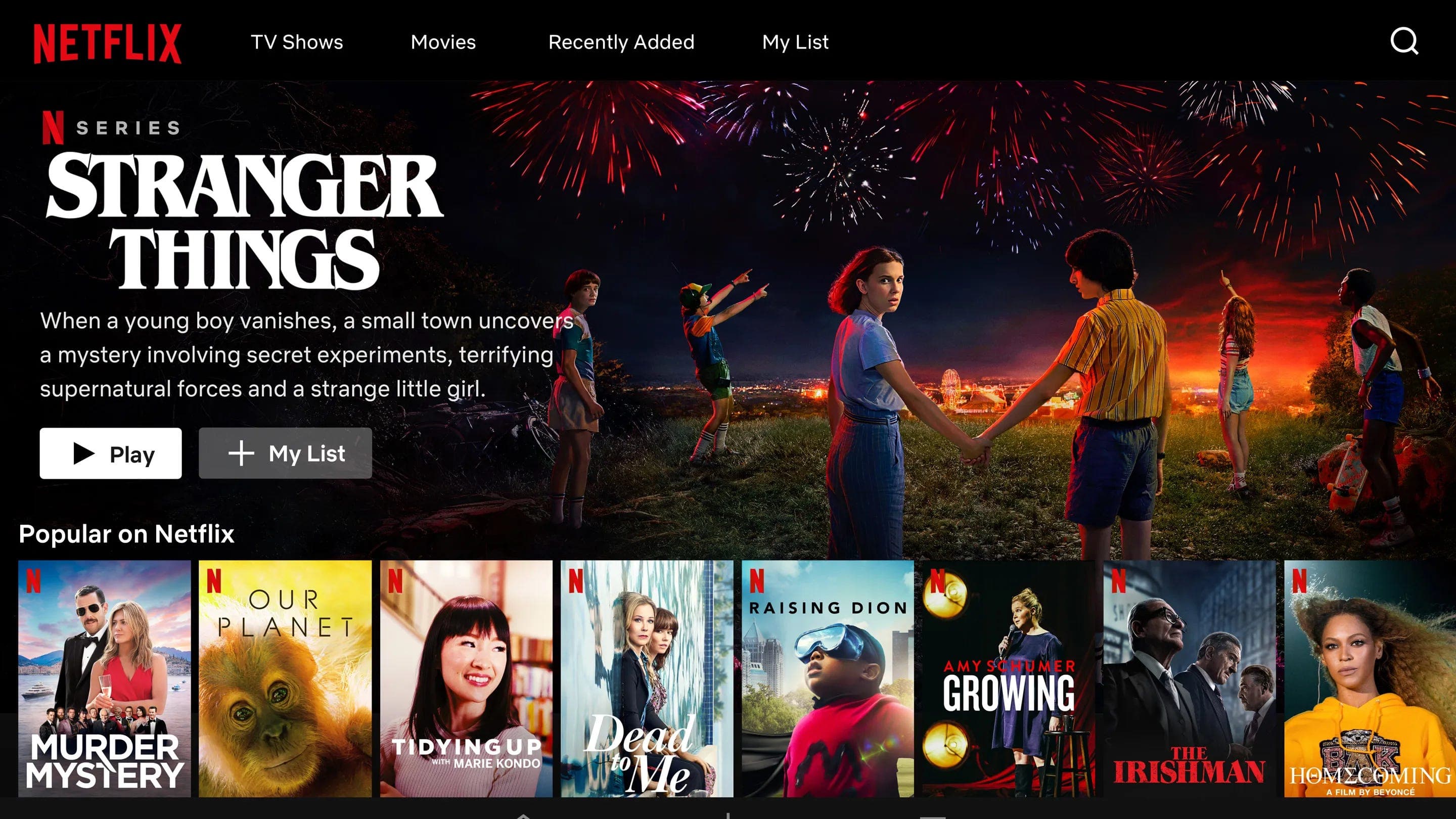
Netflix Recommendations – supervised and unsupervised learning help group viewers with similar tastes.
-
Email Spam Filters – supervised learning identifies which emails are junk.
-
Voice Assistants (Siri, Alexa) – reinforcement learning improves answers as people interact.
-
Bank Fraud Detection – ML models spot unusual spending patterns.
Best Practices for Beginners
-
Always keep your data clean — garbage in, garbage out.
-
Don’t aim for 100% accuracy; real-world data is messy.
-
Start small — even a simple classification model (e.g. spam vs not spam) can teach you a lot.
-
Learn the concepts before diving into coding or tools.
Conclusion
Machine learning concepts may sound intimidating at first, but when broken down, they’re quite approachable. By understanding ideas like supervised learning, overfitting, and features vs labels, you build the foundation for exploring advanced topics later.
Think of ML like learning to cook — once you know the basic ingredients and recipes, you can experiment and create your own dishes.
Written by
Praxiaskill
Last updated
24 September 2025